
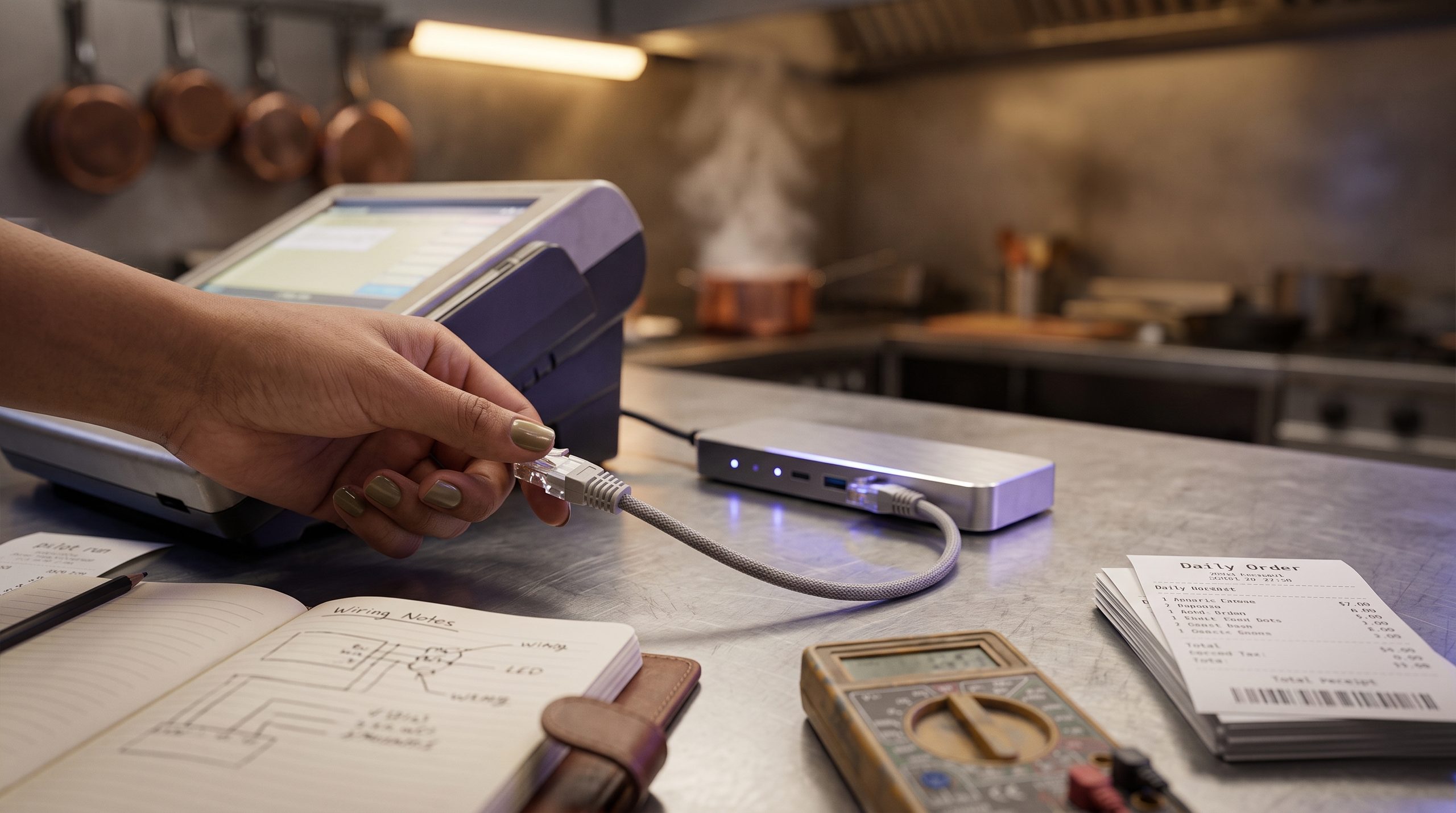
Build the Runway to Production: Get Your Restaurant AI Past Pilot
How to move restaurant AI pilots into production: connect existing POS systems, translate marketing signals into daily ops, deploy in weeks, and deliver CFO-ready outcomes (12% labor savings, 3–7% less waste, 8–12 month payback).
Pilots that drag on burn time and patience. Teams lose steam. Vendors fade. The data never lines up. According to industry research, 70% of restaurant AI projects never make it past pilot. That is avoidable.
Apex Insights | The AI Operating System for Main Street Businesses is built to get you from trial to live units with documented outcomes. We sit on top of the POS stack you already have, translate your marketing signals into daily operations decisions, and deploy in weeks—not after a 12month implementation project. When deployed, operators see a 12% labor cost reduction, 3 6% less food waste, and an 8 12 month payback for single units.
1) Why Restaurant AI Pilots Stall—and How to Build the Runway to Production
If you are responsible for technology and operations, you have likely seen these patterns:
- Implementation cost with no clear payback window. The pilot fee is one thing; the hidden work of integrations, training, and workflow changes is another. Without a target payback period, the project stalls.
- Data locked across 10, 15, sometimes 30 separate systems. POS, labor, inventory, delivery marketplaces, loyalty, marketing automation—each has a slice of the truth, but none connect cleanly.
- No way to measure whether it’s actually working. You need a baseline, a control, and a simple report that your CFO will accept.
These are the three blockers killing every pilot. The fix is not a bigger project. It’s a cleaner path to deployment: connect your current systems, agree on the KPI math up front, and turn marketing signals into storelevel actions that managers can follow every day. That is the runway to production.
2) Apex on Top of Your Existing POS: No Rip-and-Replace
You do not need a new POS to get results. Apex sits on top of the POS stack you already have. No rip-and-replace.
We connect to your existing POS and backoffice tools, then unify order, labor, and inventory data into one action board for operators. That reduces risk and keeps your teams on familiar systems while you add automation where it matters.
- Centralized data without switching vendors
- Rolebased access for owners, field leaders, and store managers
- Secure integrations and audit trails your IT lead can sign off on
This approach is built for busy operators in the United States who want a restaurant AI deployment platform that works with the tools they already trust. If you’re searching for POSintegrated AI for restaurants in the USA, Apex is designed for that exact job.
3) The Translation Layer: From Marketing Signals to Daily Ops Decisions
Most pilots stop at “insights.” Stores need decisions. Apex includes a translation layer that takes demand signals from marketing and converts them into labor, prep, and inventory actions in one place.
Here’s how it works in practice:
- Promotions and digital demand: When your marketing team pushes a family meal promotion or paid social in a region, Apex reads the uplift signal and adjusts labor by daypart, prep lists, and order quantities. Managers see the change on a single screen with reasons and targets.
- Guest behavior and loyalty: Loyalty redemptions, menu affinities, and dayofweek patterns inform which stations to staff and which SKUs to prep heavier. The system flags likely bottlenecks before they happen.
- External drivers: Weather, events, and delivery marketplace trends roll into the same forecast so you do not overschedule or overprep.
Think of it as moving from spreadsheets and gut feel to one source of truth that ties your marketing calendar directly to your operations plan. The result is less waste, tighter labor, and fewer surprises. For multiunit operators, this is practical AI for restaurant operations in the U.S., not another dashboard that managers ignore.
4) Deployment in Weeks, Not 12 Months
You do not need an enterprise rollout to see value. We deploy fast, with a process that respects your time.
- Assessment (30 minutes): We map your POS stack, identify available data, confirm priority metrics, and size the first wave of units.
- POS connection: Apex connects to your POS and key data sources. We set data contracts early so your IT team knows exactly what moves and where it goes.
- Playbook configuration: We codify your standards—labor templates by daypart, prep guides, pars, and escalation rules—so automation matches how you run your brand.
- Golive and coaching: Store managers get a daily action board. Field leaders get weekly variance reports. We track the first 45 days closely and adjust playbooks where needed.
This is built for Main Street businesses, not just large chains. Whether you run a single unit or a region, the path is the same: simple setup, guided change management, and visible results. If you’re evaluating restaurant AI automation for multiunit operators in the US, you can prove value without putting the whole organization on hold.
5) Documented Outcomes You Can Take to the CFO
A pilot that cannot be measured will not get funded. Apex ships with measurement built in, so you can show outcomes clearly.
Expected results when deployed:
- 12% labor cost reduction
- 3 6% less food waste
- 8 12 month payback for single units
How we document results:
- Clear baselines: We lock a pregolive baseline for labor as a percent of sales, waste as a percent of food cost, and key throughput metrics.
- Applestoapples comparisons: We track storeoverstore and yearoveryear where possible, flagging variance for seasonality, menu changes, or pricing.
- Weekly executive rollups: CFOready reports show savings to date, forecasted payback window, and unitlevel deltas. No mystery math.
- Playbook adherence: We log whether managers followed the recommended actions. You see when a variance is a compliance issue versus a forecast issue.
This turns “we think it helped” into “we saved 12% on labor, cut waste by 3–7%, and paid back in 8–12 months on a single unit.” That is the standard a CFO will accept.
6) Getting Started: Operator Checklist and Next Steps
You can get ready in a day. Here’s a simple checklist:
- POS access: Admin access and, if available, API credentials or scheduled exports for sales, itemlevel detail, and labor.
- Pilot scope: One pilot store (or a small cluster) where managers will engage with daily recommendations.
- Playbooks: Your current labor standards, prep guides, inventory pars, and any “must hold” SOPs we should not override.
- Promotions calendar: The next 6090 days of offers, local events, and planned spend by channel.
- Waste tracking: Your current waste logging method—digital or manual—so we can baseline and improve it.
- Decision rights: Who approves schedule changes, par updates, and vendor orders.
- ROI signoff: The finance owner who will approve the measurement plan and payback window.
Apex sits on top of the POS stack you already have. No rip-and-replace. We connect your data, configure the translation layer, and put a simple action board in the hands of your managers. You get documented outcomes, not a neverending pilot.
Apex Insights | The AI Operating System for Main Street Businesses